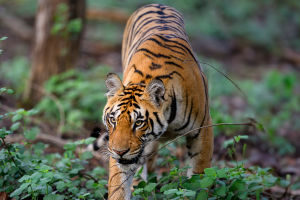
When you think of a tiger, the image that likely comes to mind is one of raw power, intense eyes, and an elegant, muscular build.
Among the various subspecies of tigers, the Bengal tiger (Panthera tigris tigris) stands out as the largest and most iconic.
These incredible creatures are not just symbols of strength but also examples of survival, resilience, and the delicate balance of nature. Let's explore what makes the Bengal tiger so unique.
Physical Features of the Bengal Tiger
The Bengal tiger is the largest subspecies of tiger, and it shows in its impressive physical characteristics. A fully grown Bengal tiger can reach lengths of up to 10 feet, including their tail, and weigh between 400 to 500 pounds. Males tend to be larger than females, and their size gives them an imposing presence in the wild.
Striking Coat: The Bengal tiger's coat is a vivid orange with black stripes, each unique to the individual. This not only serves as camouflage in the wild but also makes these tigers easily recognizable. Their white undersides help them blend into their natural surroundings in dense forests or grasslands.
Powerful Build: These tigers have muscular bodies and long, sharp claws designed for powerful pounces. Their strong jaws and teeth help them catch and capture prey, while their large paws allow them to travel through thick underbrush quietly and with ease.
Excellent Vision: Bengal tigers are known for their sharp eyesight, especially at night. Their eyes are adapted for low-light conditions, which is why they often hunt during the dusk or nighttime hours, relying on stealth and precision.
Habitat and Range of the Bengal Tiger
Bengal tigers primarily live in the dense forests, grasslands, and wetlands of their native range. While their habitat is vast, it is also increasingly fragmented due to human activities like deforestation and poaching. Here's a look at their natural environment:
Forests and Wetlands: These tigers prefer areas with dense vegetation that provide both cover and abundant prey. They thrive in tropical and subtropical forests, especially those with a mix of grasslands and wetlands.
Threats to Habitat: Human encroachment, habitat destruction, and the depletion of prey species are major threats to their habitat. As their natural surroundings shrink, Bengal tigers are forced into smaller areas, which makes survival more challenging.
Conservation Areas: To combat this, many conservation programs have created protected areas for Bengal tigers. National parks and wildlife reserves in certain regions are crucial for preserving their habitats and helping them maintain healthy populations.
Diet and Hunting Behavior
Bengal tigers are apex predators, which means they are at the top of the food chain. They hunt and feed on large prey, such as deer, feral hog, and even smaller elephants. Their hunting behavior is a mix of patience, strategy, and power.
Stealthy Hunters: These tigers rely on stealth rather than speed to catch their prey. Using their camouflage, they stalk their targets and close the distance before launching a powerful attack. They often hunt alone, and their success rate is high due to their careful approach.
Carnivorous Diet: Bengal tigers are obligate carnivores, meaning their diet consists almost entirely of meat. They need large amounts of food to sustain their energy levels. A fully grown Bengal tiger can consume up to 60 pounds of meat in a single meal, though they don't hunt every day.
Territorial Predators: Bengal tigers are territorial animals. They mark their territory using scent markings, scratches on trees, and vocalizations. These markings serve as both a warning to other tigers and a way to establish dominance in a given area.
Reproduction and Family Life
While Bengal tigers are solitary animals, they do have a fascinating family structure when it comes to reproduction. Female tigers give birth to litters of cubs, and the process of raising them is critical for the survival of the species.
Cubs and Maternity: A female Bengal tiger gives birth to 2 to 4 cubs after a gestation period of about 3.5 months. The cubs are born blind and rely entirely on their mother for care and nourishment. She will protect them fiercely during their first year, teaching them essential survival skills.
Independence: Once the cubs are around 2 years old, they begin to venture out on their own. They are independent hunters by this time, though they may remain in their mother's territory for a while before establishing their own.
Mating Seasons: Bengal tigers don't have a specific mating season but breed throughout the year. Mating behaviors include vocalizations and scent-marking, and they typically prefer to mate in isolated areas to avoid competition from other tigers.
The Bengal Tiger's Conservation Status
The Bengal tiger, while still the most populous tiger subspecies, faces significant threats to its survival. According to conservationists, the biggest challenges to Bengal tiger populations are poaching, habitat destruction, and loss of prey. Their majestic appearance often leads to them being targeted for illegal trade.
Endangered Status: Although the Bengal tiger is not classified as critically endangered, its population has been steadily declining. As of recent estimates, there are fewer than 2,500 Bengal tigers left in the wild, making it a priority species for conservation efforts.
Conservation Efforts: Many national and international organizations are working to protect these tigers. Anti-poaching laws, habitat restoration programs, and community outreach are essential in ensuring the survival of the Bengal tiger. Additionally, wildlife reserves and national parks offer a sanctuary for these incredible animals.
Public Awareness: Increasing public awareness about the plight of the Bengal tiger has also been a crucial aspect of conservation efforts. Education programs help people understand the importance of preserving these creatures and their habitats.
Reflection: Protecting the Majesty of the Tiger
The Bengal tiger is more than just a powerful predator; it's a symbol of nature's wild beauty. Its survival depends not only on protecting its natural habitat but also on the collective effort to preserve the ecosystem that sustains it. We are responsible for ensuring that future generations can witness these magnificent creatures in the wild, just as we do today.
Taking action now—whether through supporting conservation programs, reducing human-wildlife conflict, or spreading awareness—can make a world of difference in protecting the legacy of the Bengal tiger.